Today's Cleanrooms Pave the Way for Tomorrow's Technology
The smartphone in your pocket, the solar panels on rooftops and in fields converting energy, and the medications developed in cutting-edge laboratories all share a common origin: they were manufactured in environments precisely controlled down to the particle count and measured by the micron. These spaces are cleanrooms, and though they’re an unsung hero to most members of the public, they represent one of the most sophisticated achievements in modern engineering.
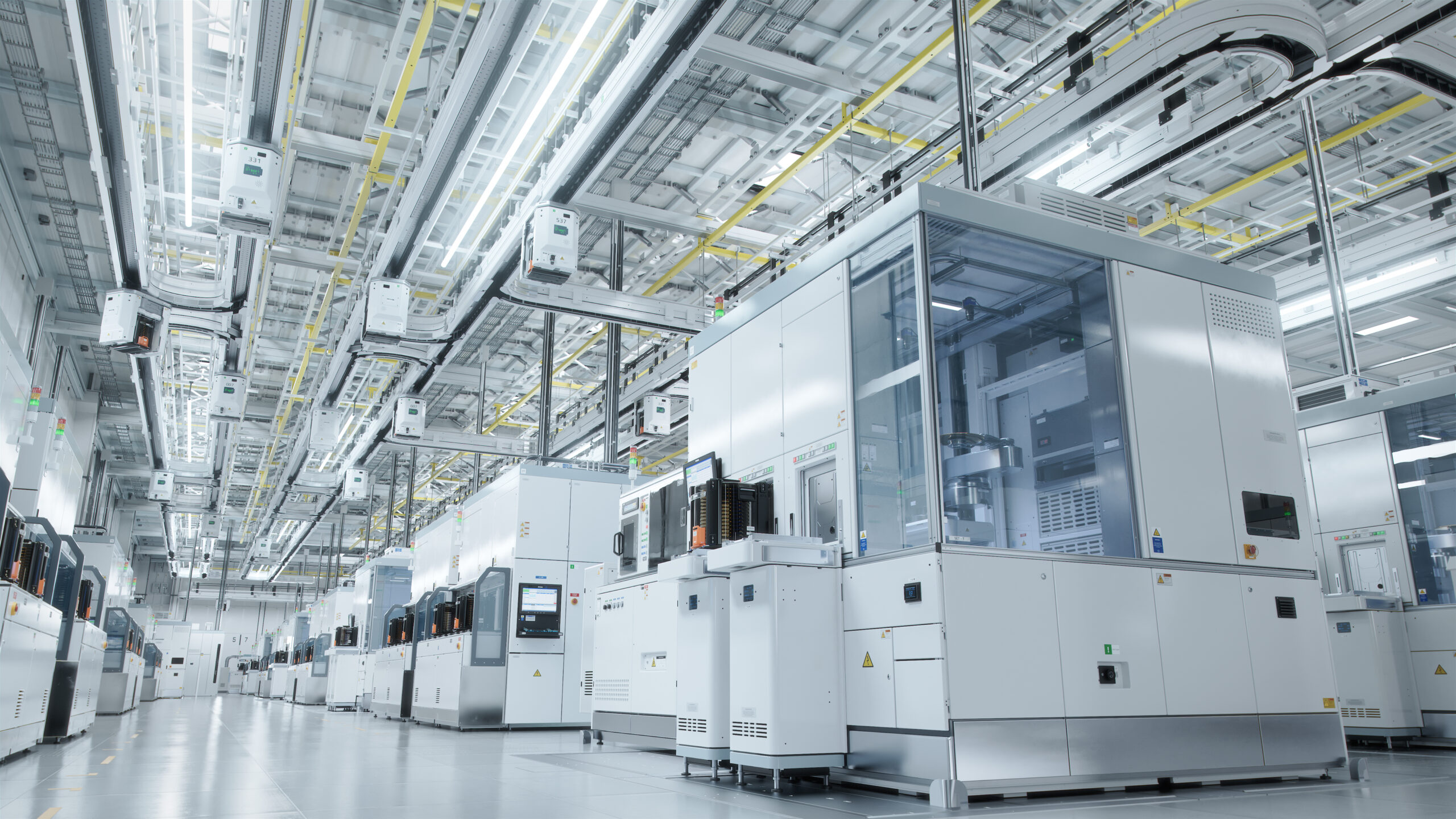
Understanding Cleanrooms: Precision Engineering at the Molecular Level
A cleanroom is far more than an exceptionally clean workspace. It’s a meticulously engineered and constructed environment where airborne particles, temperature, humidity, and air pressure are controlled to exacting standards that would have seemed impossible just decades ago.
Consider the precision involved: An ISO 5 cleanroom maintains fewer than 3,520 particles per cubic meter, with each particle measuring less than 0.5 microns—that’s just 5 millionths of a meter. To put this in perspective, a typical human hair measures approximately 75 microns in diameter. This level of control isn’t simply impressive—it’s essential for protecting manufacturing processes worth millions of dollars.
The air purity classification system itself tells a story of human achievement. In both the ISO 14644-1 classification system and the earlier Federal Standard 209e system, airborne particles are measured by diameter and by concentration in a given volume of air. The smaller the particle’s diameter, the harder it is to keep it out of a work environment, which results in a higher concentration of these particles. Conversely, larger airborne particles are easier to control and remove, so the allowance for these particles in a cleanroom environment is much lower than that of smaller particles.
ISO clean room classes ranges from ISO 9 to ISO 1. FS209e classification ranged from Class 100,000 to Class 1. In both systems, the lower the class rating, the lower the number of airborne particles allowed across all particle diameters. The lower the permitted concentration of particles, the more stringent and extensive the environmental controls must be. In simpler terms, the lower the class rating, the cleaner the room. Naturally, industrial processes are not all equally sensitive, so they require varying levels of environmental controls. The ISO rating system provides a clear measure of the control needed; for instance, a packaging application for finished electronics may be rated ISO 9, since this process does not demand a pristine environment with stringent air controls. In applications such as semiconductor manufacturing, nanotechnology development, or experimental atomic research, control is critical and the intrusion of even a microscopic particle can damage conductivity, inhibit operations, and skew results. These environments and their air controls must be engineered thoroughly and carefully.
Why Cleanroom Air Purity Matters
Today’s technology operates at scales that challenge our imagination. Modern semiconductor features measure just 5 nanometers—roughly 20,000 times smaller than a grain of salt. At this scale, it may seem that contamination would be inconvenient at worst; however, particles of this size still carry catastrophic potential. Particles deposited onto sensitive materials can destroy months of development work and render expensive manufacturing equipment and its data useless. Cleanrooms protect the sophisticated tools that drive innovation forward—equipment that often costs hundreds of millions of dollars and represents years of engineering development. These tools are so sensitive that even minor environmental fluctuations can compromise their precision.
The industries that depend on cleanrooms are the same ones shaping our future: semiconductors enabling artificial intelligence, pharmaceuticals developing breakthrough treatments, and energy storage systems making renewable power available at scale. Without cleanrooms, these critical advances simply wouldn’t be possible. As such, the purity of these environments is absolutely essential and moreover, mandated by law. Failure to maintain these standards can subject manufacturers to regulatory action including investigation, fines, and even loss of operating license. Apart from regulatory enforcement, non-compliant manufacturers can face enormous costs in high defect rates, product recalls, and equipment repairs.
The Engineering Behind Perfection
Engineering and constructing a cleanroom requires a unique blend of scientific rigor, access to highly specialized resources, and practical expertise. Every facility is designed with its specific application in mind—semiconductor fabs typically require ISO 3–5 classifications with unidirectional laminar airflow, while pharmaceutical facilities might operate at ISO 7–8 levels with additional specialized protocols. Engineering and construction partners must be deeply familiar with the differences in ratings and the implications these carry for selection of equipment and materials, implementation protocols, and jobsite maintenance and controls.
Clean build protocols progress through carefully defined levels, each with specific requirements for tools, materials, and personnel procedures. Workers undergo extensive training in contamination control, understanding that their actions during construction can directly impact the finished facility’s quality and efficiency.
Airflow design represents one of the most critical aspects of cleanroom engineering. The systems required depend entirely upon the customer’s environmental needs. Laminar flow systems are a common solution for maintaining clear airflow in highly sensitive applications. These systems create unidirectional air movement at distinct horizontal or vertical layers, providing smooth and steady airflow across a space without mixing to efficiently remove particles. For less stringent applications, turbulent flow designs offer more cost-effective solutions. The choice depends on balancing contamination sensitivity with operational requirements.
Perhaps most importantly, cleanrooms must be designed, engineered, and constructed for certification in three distinct states or phases: As-Built (facility construction complete), At-Rest (systems operational but unoccupied), and Operational (full production conditions). Each state requires specific testing protocols and documentation to ensure compliance with international standards.
Gray’s Approach: Experience Meets Innovation
At Gray, we understand that cleanroom engineering and construction are fundamentally different from these scopes on conventional facility projects. They require teams that think in nanometers, understand contamination physics, and can navigate the complex intersection of engineering precision and practical construction methods within extremely tight tolerances.
Our approach is built on deep industry experience. Leaders like Bill Mudd, a senior manager in Gray’s Advanced Technology market, bring decades of expertise from projects around the globe. This experience translates into practical knowledge about what works, what doesn’t, and how to anticipate challenges before they become problems.
Our teams receive extensive training in clean engineering and construction protocols because we recognize that successful cleanroom projects depend on every team member understanding their role in contamination control. From the project manager and MEP engineer to the HVAC specialist and electrician installing the final fixture, everyone contributes to the facility’s effective performance.
Building for Tomorrow’s Technology
“One of the most fascinating aspects of cleanroom construction is that we’re often building facilities for technologies that don’t yet exist,” says Mudd. “The cleanroom constructed today might be manufacturing quantum processors, advanced battery systems, or bioengineered materials in five years.”
This reality requires a forward-thinking approach that anticipates future needs while meeting today’s engineering and construction requirements. Cleanrooms are much more than tools for quality control—they’re complex systems that manifest the conditions necessary for human innovation.
“Every project we complete becomes part of the infrastructure that makes breakthrough technologies possible,” says Mudd.
Behind every successful cleanroom project is a team of professionals who understand that precision engineering serves a fundamental human purpose: advancing technology that raises our quality of life. Whether they’re supporting the development of more effective medicines, cleaner energy, or more powerful computers, cleanrooms represent our incredible ability to control and improve our environment.
At Gray, we take pride in being part of this mission. We unite the technical expertise, project management capabilities, and attention to detail required to engineer and build facilities where the extraordinary becomes routine.
When your project demands the highest standards of cleanliness and precision, Gray delivers the expertise and reliability to make advanced manufacturing possible. From initial design through final certification, we’re committed to building the infrastructure for tomorrow’s innovations.
Learn more about how we serve the Advanced Technology market.
Related News & Insights
Data Centers
Design-Build & Liquid Cooling: Powering the Next Generation of Data Centers
Industry, Corporate News
January 08, 2026Advanced Technology, Construction
Navigating Innovation and Sustainability in the Solar Cell Industry
Industry
Manufacturing
A Clean Sweep in the Energy Sector
Industry